Most manufacturing plants are losing 15–30% of their energy spend to inefficiencies they cannot see, aging compressors running at partial load, uninsulated steam lines, outdated motors, HVAC systems cycling when they should not be. The problem is not carelessness. It is that energy waste is invisible without the right tools and a trained eye to find it.
An industrial energy audit makes the invisible visible. It tells you exactly where your energy is going, which losses are costing you the most, and what fixes will deliver the fastest payback. At Daitan Solution, we conduct structured energy audits for manufacturing plants across textile, food processing, cement, and steel. This guide walks you through what the process involves and what you can realistically expect.
What is an Industrial Energy Audit?
An industrial energy audit is a systematic measurement of how your facility uses energy and where it wastes it. Experts review every energy-consuming system in your plant.It is a process where experts study how your facility uses energy. They review every part of your operation, from machinery and production lines to lighting and HVAC systems, to find areas where energy may be wasted. The audit begins by gathering data from your past utility bills and other records. Then, specialists visit your plant and use tools such as sensors and thermal imaging to see where energy is lost.
At Daitan Solution, we believe that every manufacturing plant is unique. That is why our Industrial Energy Audit Services for Manufacturing Plants are tailored to meet your specific needs. We use reliable methods and simple data analysis to give you clear insights into your energy use. Our aim is to provide you with a roadmap that points out the areas where you can save money and improve efficiency. In simple words, an energy audit shows you the hidden leaks in your energy use and gives you practical steps to fix them.
Why Manufacturing Plants Need an Industrial Energy Audit
Manufacturing plants face many challenges. Rising energy costs, aging equipment, and inefficient processes can all hurt your bottom line. An industrial energy audit is more than just a routine checkup. It is an investment in your plant’s future that can lead to significant improvements.
Here is where manufacturing plants typically lose the most:
- Compressed air leaks — waste 20–30% of total air generated in most plants
- Oversized or aging motors — draw far more power than needed; variable frequency drives can cut motor energy use by 30–50%
- Failed steam traps and uninsulated pipes — silent cost drains in any boiler or steam-based process
- HVAC and lighting — poorly zoned cooling and lights left running in unoccupied areas add up fast across a large facility
- Peak demand charges — shifting certain processes off-peak can reduce electricity bills without touching any equipment
When you perform an energy audit, you get a clear picture of where energy is being wasted. This means you can make changes that will reduce your utility bills and improve the performance of your machines. For example, you may find that certain old machines use more energy than necessary or that parts of your facility are not insulated well enough. By addressing these issues, you not only cut costs but also extend the life of your equipment.
Another benefit is that energy audits help you meet environmental regulations. Many governments are setting stricter rules for energy consumption and carbon emissions. A thorough audit will show you how to comply with these rules, which can save you from fines and improve your company’s reputation. In short, an energy audit provides a win-win solution: you save money while also taking steps toward a greener future. With the help of Daitan Solution, you can be confident that your plant will operate at peak efficiency.
The Industrial Energy Audit Process: A Step-by-Step Guide
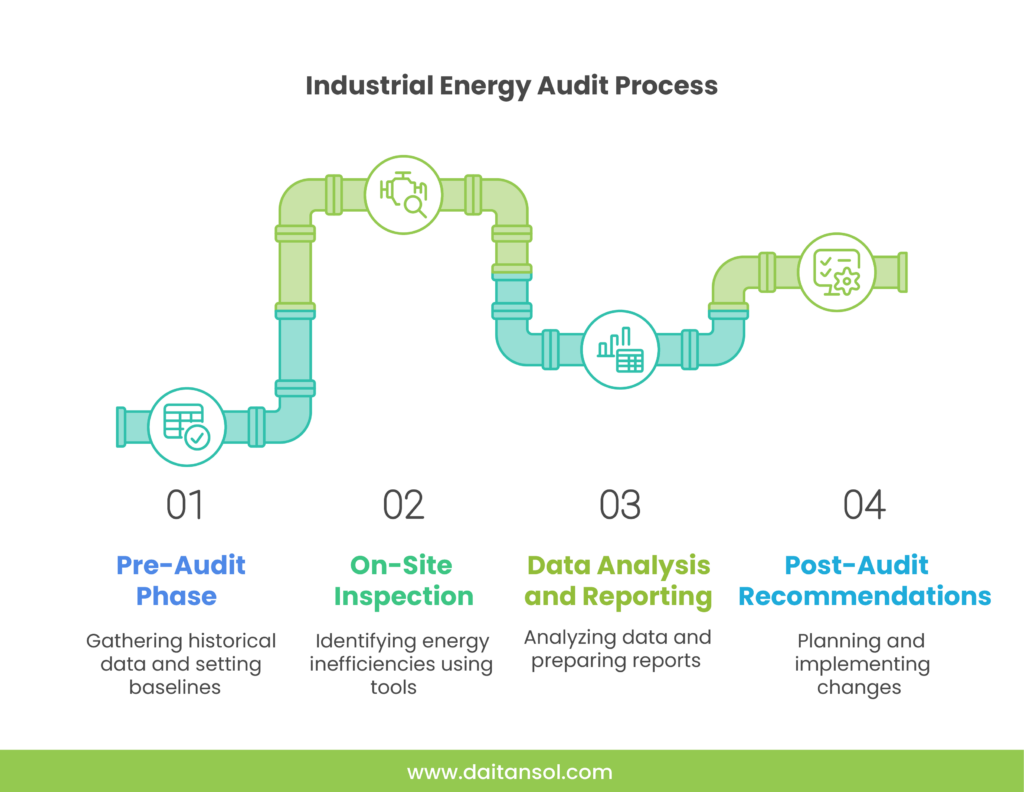
Understanding the process of an industrial energy audit can help you see its value and prepare your plant for the changes ahead. Here is how we at Daitan Solution work through each step of the audit process:
Pre-Audit Phase
We begin by getting to know your facility. This stage involves collecting historical data, such as past utility bills and energy consumption records. We review your current energy practices and set a baseline for comparison. This information is essential because it shows us where to start and what improvements can be made. Our team makes sure that every detail is recorded so that nothing is missed later on.
On-Site Inspection
The next step is a hands-on inspection of your manufacturing plant. Our experts visit your facility for a detailed walk-through. They use various tools, such as energy sensors and thermal imaging cameras, to identify where energy is leaking or being used inefficiently. This is the most exciting part of the audit because it reveals the hidden areas of energy waste. We take our time to inspect every area, from the production floor to the storage areas, and even the building envelope.
Data Analysis and Reporting
Once the on-site inspection is complete, our team analyzes the data gathered. We look for patterns and pinpoint the most critical issues affecting your plant’s energy use. Our analysis is clear and straightforward. We then prepare a detailed report that outlines our findings. In this report, you will see simple explanations, practical advice, and clear recommendations. We also include estimated costs for improvements and the potential return on investment. This report becomes your guide to making informed decisions about energy savings.
Post-Audit Recommendations
The audit does not end with the report. We work closely with you to plan and implement the recommended changes. Our team helps you understand the steps needed to fix the identified issues. We develop a customized implementation roadmap that fits your plant’s specific needs. After changes are made, we offer follow-up visits to check that the improvements are working as planned. This ongoing support ensures that the benefits of the audit are long-lasting.
Daitan Solution: Your Trusted Industrial Energy Audit Service Provider
At Daitan Solution, we use thermal imaging cameras, power analyzers, ultrasonic leak detectors, and data loggers not just a visual walkthrough. Every recommendation in our report comes with an estimated investment, expected savings figure, and simple payback period so you know exactly what you are committing to before spending a rupee. We work with plants across textile, cement, food processing, and general manufacturing. Our job is not to hand you a document and disappear it is to help you implement the fixes that move the needle fastest.
Key Benefits of Industrial Energy Audits for Manufacturing Plants
An industrial energy audit offers many benefits for manufacturing plants. These benefits can make a significant difference in your plant’s performance and profitability. Here are some of the key advantages:
• Lower Energy Bills: By identifying areas where energy is wasted, an audit helps you cut unnecessary costs. This means your utility bills go down and your savings go up.
• Improved Equipment Performance: When your machines run more efficiently, they work better and last longer. This means fewer breakdowns and less downtime in your production process.
• Clear Return on Investment: With detailed data and clear recommendations, you know exactly where your money is going. An audit can show you the expected return on investment, making it easier to plan future improvements.
• Environmental Benefits: Reducing energy use helps your plant lower its carbon footprint. This not only helps the environment but also ensures you comply with environmental regulations. It can also enhance your company’s image as a responsible business.
• Better Planning: With a clear report in hand, you can plan for future upgrades and improvements. The report serves as a roadmap that guides you through the changes needed to make your plant more energy efficient.
Daitan Solution makes sure that these benefits are not just promises. We work hard to deliver results that you can see and measure. When your plant saves energy and reduces costs, you gain a competitive advantage in the market. This is the power of a well-conducted industrial energy audit.
Future Trends in Industrial Energy Audits
The world of energy management is always changing. New tools and ideas are emerging that can make energy audits even more effective. Here are some trends to keep an eye on:
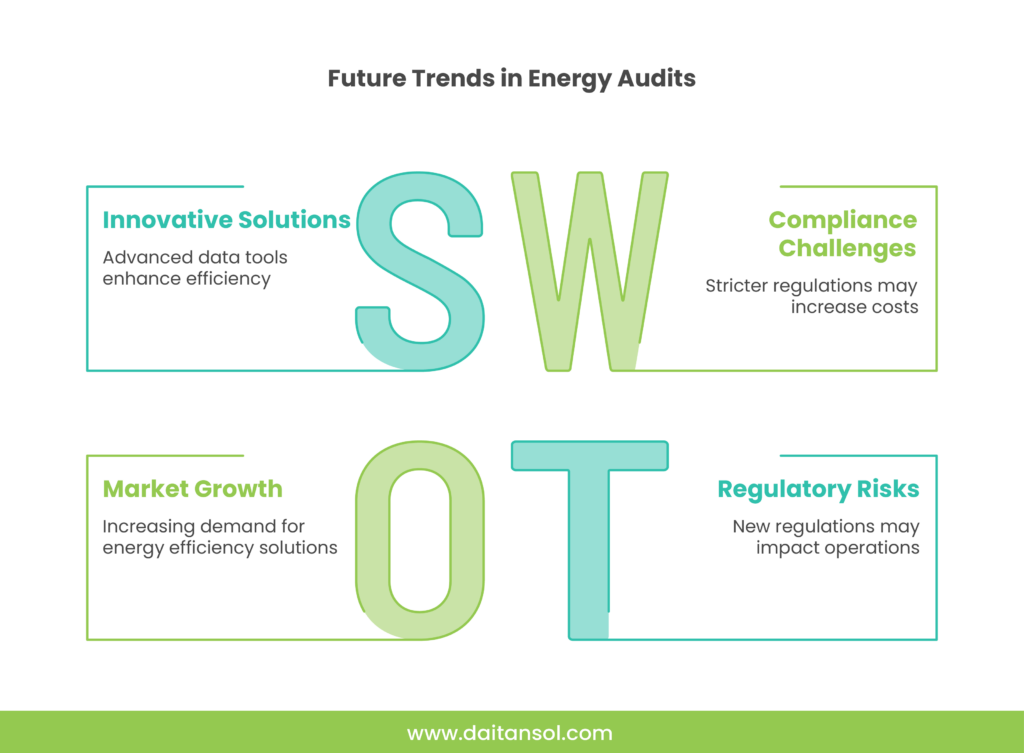
• Advanced Data Tools: New software and analytics tools are making it easier to spot inefficiencies. These tools can predict where energy may be wasted before it becomes a big problem.
• Real-Time Monitoring: The use of connected sensors is growing. These sensors provide live data on energy use, which helps in making immediate adjustments to save energy.
• Focus on Renewable Energy: Many plants are looking to use renewable energy sources. As the cost of solar and wind energy drops, more manufacturing plants are planning for a greener future.
• Evolving Environmental Regulations: Government rules are becoming stricter when it comes to energy use and emissions. Regular energy audits will become more important as plants work to comply with these new standards.
Daitan Solution stays up to date with these trends. We continuously improve our methods and adopt new technologies to give your plant the best possible service. By being aware of future trends, you can ensure that your manufacturing plant remains efficient and competitive in a changing world.
FAQs
Q: How much does an industrial energy audit cost?
A: It depends on the size and complexity of your facility. We offer a free initial consultation to assess the scope and give you a clear quote before any commitment is made.
Q: How long does the audit take — will it disrupt our production?
A: A typical plant audit takes 1–3 days on-site depending on facility size. We work around your production schedule to keep disruption minimal.
Q: What is the typical payback period on the changes you recommend?
A: Quick wins like compressed air leak repairs and lighting upgrades often pay back in under 6 months. Equipment upgrades typically range from 1–3 years depending on usage intensity.
Q: Do you handle implementation or just deliver the report?
A: Both options are available. We can provide the audit report for your internal team to act on, or we can support the implementation process end-to-end.
Q: What industries do you work with?
A: We work with textile, cement, food processing, steel, and general manufacturing plants. If you are unsure whether your facility qualifies, reach out and we will tell you honestly within 24 hours.
Q: How can I schedule an industrial energy audit with Daitan Solution?
A: It is easy. Visit our website or call our support team to book your consultation. We will work with you to find a convenient time for an audit.
Q: What are the main benefits of an industrial energy audit for my manufacturing plant?
A: An audit helps find areas where energy is wasted, lowers your energy bills, improves equipment performance, and helps your plant meet environmental rules.
Q: How does Daitan Solution help reduce energy costs in manufacturing?
A: We use reliable tools and clear data analysis to identify problems and offer simple, effective solutions that save energy and reduce costs.
Q: How often should manufacturing plants undergo an industrial energy audit?
A: We suggest an audit every two to three years or whenever there are significant changes in your plant. Regular audits help keep your operations running efficiently.
Q: Why should I choose Daitan Solution over other energy audit service providers?
A: Our experience, simple approach, and proven results make us the best choice. We customize our service for your plant and work closely with you from start to finish.
Conclusion
If your plant has not had a structured energy audit in the last two years, there is almost certainly money being lost that a single assessment would recover many times over.
Contact Daitan Solution for a free consultation, we will tell you upfront what we expect to find and whether an audit makes financial sense for your specific facility.